Chapter 7 – A Thousand False Horizons
by Velvet Crown TalesSave Your Reading History
Create a free reader account to keep your stories and last opened chapters across devices.
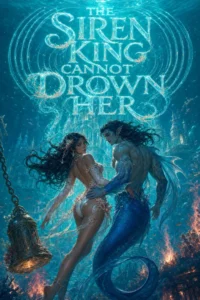
The emergency channel ends at a maintenance bell halfway to the surface.
One lever would release me upward. Through the glass I can see Veyr Island sinking toward the trench, its cliffs already below the tide. Below, Nacre is being forced through the Leviathan’s throat like a swallowed crown.
I can escape one disaster and spend the rest of my life selling explanations.
Instead I open my mother’s pearl.
Her stored horizon floods the bell’s transmitter. I attach Thalassar’s royal current key and send the diagram to every salvage frequency I have ever cheated. Then I add coordinates—thousands of them, all false in exactly the right way.
The maps tell ships they will find treasure by drilling narrow air shafts at points surrounding Veyr. Greedy captains respond first. Rescue crews follow when they recognize my signature. Fishing boats, smugglers, navy cutters, and people I once defrauded converge on an island the official charts declare lost.
Each drill releases a column of trapped air. Together, the columns form a pressure cradle beneath the island. The sea still rises, but the land stops descending.
Nacre does not.
The city tears through the Leviathan’s gullet. Without a second anchor, the pressure will invert and crush everyone inside.
Thalassar’s voice returns through the key. The wardens have chained him to the royal gate.
“The exchange recognizes my gills as sovereign control,” he says. “If they are removed, the mechanism loses its command.”
“Removed how?”
He does not answer.
I dive back.
The current carries me through tumbling districts. Citizens cling to bone towers. Breath pearls scatter like hail. At the throat gate, Thalassar fights his own guard while the pressure field rips blue fire from his skin.
I reach him as he takes the warden’s blade.
“Do not,” I say, understanding too late.
He places the edge beneath the first gill membrane. “My sister died because I believed choice was a luxury. You nearly died because I believed the same.”
“There are less theatrical ways to resign.”
“Not in my family.”
He cuts.
Silver blood fills the water. The royal pressure gate flickers. He cuts the second membrane before I can stop him. The leash around my wrist vanishes. So does every current obeying his blood.
For the first time, Nacre belongs to nobody.
Citizens panic, then begin making their own pressure pockets. Market singers lend air to children. Salvagers anchor towers. The city survives not through one prince’s command but through thousands of small choices.
Thalassar cannot breathe.
I open our tether from my side. Human lungs take over the work his gills abandoned. Each breath costs me a fragment of sky, but I refuse to close the link.
The Leviathan’s eye opens beneath the city.
He is not rising because the exchange drives him. He is waking after centuries of being used as architecture. His vast body turns upward, carrying Nacre with him.
Surface crews see the ocean dome and flee. Veyr’s air cradle shakes. If the Leviathan breaches at full speed, the pressure wave will flatten the island and burst Nacre at once.
Thalassar, breathing through me, points toward the creature’s heart.
“One shared command remains,” he says inside my chest. “We can force him down and save the island, or let him rise and give Nacre a chance.”
“Another choice with only one survivor.”
“Unless your maps can invent a third.”
The Leviathan accelerates.
I take the former prince’s hand and draw a route no ocean has ever used.
My false-map broadcast reaches people with every reason to ignore me. The captain of a salvage crew I stranded replies first.
“You owe us a ship,” she says over the cracked frequency.
“Save the island and I’ll give you a city.”
“That sounds like another scam.”
“The coordinates are false.”
She laughs. “Now I believe you.”
Surface vessels organize into rings based on my impossible charts. Beneath them, Nacre citizens hear the same broadcast translated through whale song. For the plan to work, both groups must drill at synchronized points while believing their counterparts will do the same.
The royal council orders Nacre’s workers back to fixed stations. Market singers drown the command in thousands of borrowed voices. Salvagers sever the monopolized air pipes. Families contribute breath pearls voluntarily, receiving written claims for their return rather than permanent sale.
The pressure cradle forms from acts no single ruler can coordinate.
When I dive back to Thalassar, his guards have offered him a restored crown if he activates the sacrifice manually. He refuses before seeing me. The council begins harvesting his gills anyway, intending to use them as a biological key.
He tears them first—not only to stop the machine, but to make his body politically useless.
Afterward, keeping him alive requires constant attention. Our breath tether is no longer effortless magic; it is labor. I count his pulse, adjust the rhythm, and force him to signal when pain increases. He dislikes dependence. I dislike staying. We do both.
As the Leviathan rises, citizens move Thalassar through the throat gate on a litter made from broken royal pressure rods. No one bows. Several curse him for the fleets. One worker gives him a breath shell anyway.
Accountability and mercy occupy the same current without canceling each other.
At the final junction, the former prince offers to remain and slow the Leviathan while I return home. The old Iona would accept the clean exit.
I attach my map to the heart current instead.
“You wanted a navigator,” I tell him. “Stop volunteering to become cargo.”
Together we enter the creature’s heartbeat, where the route must be drawn in pressure, memory, and one shared human breath.
Forbidden tales you might also love